Tuesday, February 23, 2016

The beginning of the end


In January approximately 3 months before officially ending my Peace Corps service, I attended my Close of Service conference- a final get together with all the people I came to country with. This conference helped us focus on options for the future: how to revamp our resumes, the logistics of leaving country, and probably most important, how to say goodbye.

Many volunteers feel stressed that they do not do enough in their service – “How can I be more productive?” is always a question that runs through our mind. But our COS conference really helped us pinpoint the success we have had- not just with quantifying the number of stoves we built or number of people who attended our meetings-but also with how many goodbyes we will have to say and what friendships we will need to leave behind.  With that being said I would like to say something to my group- G74, and any current PCV or RPCV.

So we are here at Close of Service conference and it is the last time my group will be together here in country and honestly, maybe forever. In 3 months or so we will be pooping in cups and then moving on from Peace Corps. Some of us are staying a third year, some are going to graduate school, some traveling, some working, and others just figuring it out. So, the time for goodbyes has really started to arrive. Here are a few thoughts and words for my fellow friends of Group 74.

Don’t sell yourself short. That has been something that they have focused on at the office as we look at marketing ourselves for jobs and schools and stuff. And, you know what, they are right.

You are amazing. You somehow and for some reason reached the decision to DARE to be the change you wanted to see in the world. Rather than posting on social networks about problems and injustice in the world, you went out to see for yourself what you could do about it. You are all of those inspirational quotes. You embody them. You are living them. You did it.

We did it. My successes in my service are due to you. You have motivated me, advised me, accompanied me, inspired me, hugged me, shared gastro problems with me, cried with me, sweated and danced with me. With this farewell comes the wonderful realization that now we will travel everywhere all over the world, spreading joy, genuinely caring and helping others, and bringing light to your new homes. All sorts of places will now shine brighter thanks to your presence. So go out and brighten your new little corner of the world.

I will forever be sending you love, and I thank you sincerely for making me a better person today than I was before meeting you.


Darien

 
Besides Panama City, I had never been east of the Canal. The Darien is the province furthest east in the country and shares a border with Columbia. The history is interesting with rich latinos, poor indigenous, drug traffickers, tourists and the national guard. It is also the least touched province in the country, with the fewest roads and the most vegetation. We took a week vacation to explore and get lost in the depths of the Darien.
The Darien is historically interesting because as government and drug problems worsened in Columbia, the Darien was abandoned. The government over years wanted to repopulate the area so sold land for super cheap. This motivated many latinos to buy land, slash and burn, and make profit off cattle ranching. This being noted, the area is mixed with wealthy latino populations next to struggling indigenous huts. The indigenous group is called the Embera and actually migrated from Columbia less than 100 years ago. There is also a national guard group living there to protect against drug lords-but with the corruptness and lack of authority, the guards are commonly seen throughout the community smoking marijuana and trying to score with a young indigenous
woman.
 
 
Two elderly brothers telling about their travels from Columbia to Panama 
 
Even thought they are poor, they use natural resources to make elegant houses
 
From the city, we traveled 6 hours by car and 2 hours by boat to reach Sambu, a fairly developed town (and when I say developed I mean electricity and questionable-potable water) where a current volunteer hosted us. We saw large mammals and a plethora of bird species along the river.


Sambu River
 
Volunteer with counterpart wearing traditional clothing

Women traditionally wear parumas (basically a sheet that is made and imported from Japan) wrapped around the waist and the men wear a loin cloth. They paint their bodies with a plant jagua that is also used for medicinal purposes. Each design signifies a different story and meaning. We were not embarrassed to take integration to the maximum, strip off our shirts, and be painted. The woman’s chest for the Emberea is not sexualized, but seen as a symbol of family and motherhood, as the children are fed from the breast. In their cultural, thigs and legs are seen as the sexual symbol so it is important that you cover them up with a beautiful peruma. Since we were not used to wearing a sheet wrapped around our waist (no elastic) we had some trouble keeping the damn things from falling.


Artisan work with a type of grass

Seeds transformed into beautiful figurines!

Being painted back....


and front


Painted in perumas


I loved my time in the Darien and am thankful I was able to see a part of the country I had never seen before.


Monday, December 21, 2015

Holiday Spirit


Things have been going smoothly in La Mina since my return. We have been working diligently on the eco stoves. With your donations, we have built 8 family stoves and 2 industrial stoves. We have several more to make and is in the plan to do so after the holidays. Thank so much for those who donated!


Everyone helps out


Benefiting family with the technicians
 
Transport of materials...such wide loads !


The recycling center has also been taking off! Every month we have a “Dia de Reciclar” or Recycling Day where people are encouraged to bring recyclables to the center we made in the middle of the community. The last few months have been great turn outs. People came with huge bags of cans and everyone from all sizes and ages started crushing them. Some kids even got so into it they invented a “can crusher” from some wood and old nails lying around. Some of the adults make a competition to see who could crush faster.

I am working with ANAM (the national environmental agency) to take the community’s recycling to a recycling vender. When we have enough, we call our local representative and he comes to look for it in his truck free of charge. Last month we had our first sell and hauled out almost 400 pounds of trash! Cans, plastic, paper and cardboard. With this the community earned over $50 that can be used for their benefit.

One of the biggest success from this past month was a Christmas party I planned with ANAM. The representative who helps us with the recycling project informed me that every year they plan a Christmas party for a poor community and he wanted to bring the celebration this year to La Mina (connecting local agencies to communities.. win!)
I turned in a list of all of the children in the community and coordinated games with the teachers. ANAM reps told me they would bring a “few” goodies… HAH! on the day of the event 5 cars rolled up FULL of people AND presents, piƱatas, candy, second hand clothes, food, and a sound system.

The kids had a great time doing team building challenges and playing games. Meanwhile the parents enjoyed watching the kids play.
After the party many of the parents thanked and congratulated me for bringing and organizing an opportunity for the kids. They had never seen a party like this one before.
Using the industrial eco-stove that we made at the school


Gifts for all

Just keep dancing

Fun!

Pinata craziness

Ice Cream on a hot day

Everyone got to eat!


I left the school that afternoon beat, but feeling loved. As a volunteer people ask a lot of you and most of the time (at least In Panama) people aren’t too grateful for what volunteers do and usually just complain. It was very nice to hear words of inspiration and gratefulness.

I hope all of my readers also have a very merry Christmas and happy new year!

Saturday, October 31, 2015

When there seems to be no hope, dare to find some


This post is dedicated to an unfortunate incident that involved my evacuation from La Mina. On September 3rd I was asked by Peace Corps to leave the community and on September 28th I was finally able to return to the community. While the details of the incident are insignificant to my readers, I want them to understand my emotions of being taken from a community. A community that after a year of being here in Panama and having to change sites, was finally feeling like I was getting work done. A community where I felt really loved. I was taken out because of consistent encounters with a young man who was clearly interested in me. The catalyst happened at a birthday party, when he approached me several times very intoxicated. That very same night he broke into another house and grabbed a girl. Peace corps saw it as a threat to my security and removed me.
I know throughout my blog I have complained about Peace Corps in various aspects, however I do want to say that with this security incident, I have been very pleased with how Peace Corps has handled the situation and my comfort. After several meetings with the community and lawyers and prosecutors, I was finally able to return. It was a hard time emotionally because I was not allowed to go back without a solid security plan, nor did I know when I was able to return. Every other day was a guessing game of where I was going to be or needed to be. I called volunteers on very short noticing asking for a place to stay so I didn’t have to be cooped up in a hotel in Panama City the whole time. I am very grateful to have had volunteers here to support me through the process along with the Peace Corps Staff.  Other options were to be placed in another community, but there was no way I was going to go through ANOTHER site change. Or I could have Early Terminated and retuned to the United States. As hard as my service has been here in Panama, I love my people of La Mina and could not think of abandoning them. I used this time to reflect on my service and visit volunteers in parts of the country I had never been.


On another note, I would like to thank all of those who donated to the Eco Stove project! In less than one week I was able to raise all of the necessary funds and now that I have returned to La Mina, we will be on our way to construction. Thank you all so much.

Monday, September 14, 2015

Tutti Frutti in Panama!


Being in a Central American country, I have an almost endless amount of avocados, mangos, bananas, pineapple, plantains, pineapple, and papaya.
But there are of course a plethora of fruits that I’m sure most readers have never heard of.
Guanabana (soursop)- probably one of my favorites. This big squishy green fruit can be eaten as is or makes a kick ass juice/popsicle. The taste is like a combination of strawberries and pineapple with an underlying creamy flavor of coconut and banana…with this mixture how could you not love it!


Mamochino (rambutan)- this small fruit is related to lychee. It is native to Southeast Asia but has made its way to Central America. It has a leathery pink-red skin that has spine like formations (don’t worry they don’t prick). The fruit inside is white-pale pink and has a taste similar to grapes.


Guava- different from the guava we know as Americans. Guava here comes in long pods (almost look like beans or peas in their pods). The trees are large and grow along rivers and streams. The fruit is also similar to lychee but has a hairy layer. The seeds are large and are often used by indigenous people for artisan crafts.


Nance- a small yellow fruit that is fairly bitter but when mixed with sugar makes a lightly sweet juice. There is also pesa de nance, which has the consistency of pudding. It is made with the nance fruit, flour, and sugar and mixed and cooked down until you have a thick creamy beverage.
 
Guandu (pigeon peas)- small purple beans that are usually added with rice. Rice with guandu and coconut is one of my favorite Panamanian dishes


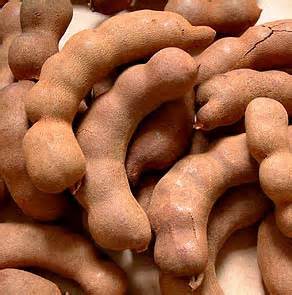
Tamarindo (tamarind)- a small red fruit that makes a yummy cold drink on those unbearably hot days
 
 
Fruta china- (carambola or star fruit)- I’ve only eaten once in Panama but absolutely loved it. The fruit has distinctive ridges running down its sides (usually five but can sometimes vary); in cross-section, it resembles a star, hence its name. The entire fruit is edible and is usually eaten out of hand. They may also be used in cooking and can be made into relishes, preserves, and juice drinks.


Naranjilla- this fruit looks very similar to an orange but don’t be fooled-the outside skin is actually a very hard shell that takes a machete to open. Inside is a yummy green translucent pulp that has a taste of pineapple and lemon.
 
 
With all these yummy fruits its no wonder that dental problems are so common!

Wednesday, September 9, 2015

Now, it is up to you!


I have now been in service for 19 months- time flies! With only 7 months left of my service, I am soaking in as much Panama time as possible: visiting other volunteers, seeing other parts of the country, and sharing with community members.

But with only 7 months left there is still a plethora of work to do! As mentioned in the previous post, we are trying to finish an eco-stove project and are still organizing an effective trash management system. At this point in my service, I am asking friends, followers, family and anyone interested in PC work in Panama to help me and the community of La Mina!

Below is the link with more information about the project and how to donate.

https://beta.peacecorps.gov/donate/project/advancing-cook-technology-in-panama/

For those who have been following, I hope my story has been interesting, insightful and educational. Those who are familiar with the challenges and successes, thank you for always being by my side. My service could not have come this far without your support.

Friday, July 31, 2015

Whats cooking in Panama?

Life in La Mina has been going great. Two months have passed and I know everyone on a first name basis and have built some great friendships.

In terms of work, I have been organizing 2 main projects. The first primary project is ecological stoves. The traditional cook method in Panama involves the pot on top of 3 rocks and underneath is an open flame. However, people is it an open flame, this method uses an abundant amount of firewood, takes a long time to cook since the heat escapes, and the smoke has hazardous effects on the cookers. 

Traditional cooking method

The ecological stove is very similar to a fireplace that encloses the flame and traps in the heat. There are three main benefits to the eco-stove:

1. Less firewood is used. Because the heat is trapped, it is not necessary to use as much firewood. As a conservation volunteer, I am promoting the reduction of wood use and deforestation. Estimates vary, but deforestation is thought to claim up to 50,000 hectares (123,500 acres) of forest a year in Panama
. Also, since less time is required to look for firewood, there are social impacts. With development, more women are leaving to look for work and are learning trades to earn their own salary. With less time spent around the house (looking for wood) this time can be spent supporting the family.


2. Less smoke. Millions of Panamanians suffer from lung diseases such as asthma, lung cancer, cystic fibrosis, and bronchitis. It is estimated that many of these sickness were smoke related from cooking over an open fire. It is estimated that the eco-stoves produce up to 50% less smoke.
3. Cooks faster. It is estimated that the eco stove cooks in half the time of the traditional 3 rock method.


Bad ass eco stove


Community members and I picking up materials
Making the bricks
The materials mainly consist of bricks and cement. I will be writing a grant to pay for the bricks, cement, and iron grills. With the help of the community, participants will be providing local materials such as sand, rocks, and ash.


There have been some challenges that have come along with the eco stove project. As a volunteer we are always trying to promote educational projects. For those who wanted to participate in the project and receive a stove in their home, I had several mandatory meetings (stove benefits and deforestation), participants had to agree to look for their own local materials, bought materials will be dropped off in a local area and participants had to agree to look for their materials to bring to their house, and participants agreed to pay $5 to help with transport costs and help pay for food when we have communal work days.
Some participants are trying to get out of the requirements by having family members attend the meetings to share the information. Others just want to pay the $5 and have others look for the materials and participate in the work days. There are also several families who want to participate but do not live permanently in the community, making participation difficult. Others do not use a 3 rock stove and use a gas stove but still want an eco-stove because they see it as an opportunity for a pretty gift (I could criticize the Panamanian government here, who constantly gifts things to its citizens, making the people very dependent on their aid). To help avoid putting all of the decision making on me, I helped found a Stove Committee- president, treasurer, and secretary to help me not only with the challenges but also so the community itself can feel responsible for the project.

The second project we are initiating is trash management. The previous volunteer was able to solicit bins to organize recyclables. Now my job is to create a responsible group to organize transport and funds. There is a recycling facility about an hour away from the community and the Ministry of the Environment has agreed to help with the transport of the recyclables. I have also been working on the educational aspects of the risks of burning trash, the time it takes for trash to decompose and trash crafts.

We started construction on a recycling center. The idea is to build a house to store the bins away from dogs or other animals. And when the bins fill up- we have extra storage. It has been very inspiring seeing the community coming together with the necessary materials- nails, wood, zinc sheets, ect.

I also spend one day a week in the school garden. The students, teachers and I have worked on organic compost, organic bug repellents, seed beds and seed saving.

I have also taken some time to explore the beautiful surrounding areas- aka the province of Cocle. Many community members have a second house close to their farm up in the mountains. I have been lucky enough to hike up into the mountains to check out the beautiful views and enjoy the fresh breeze! 


Also Peace Corps Panama now has its own website! Check it out
http://panama.peacecorps.gov/content/community-environmental-conservation-0