Monday, September 14, 2015

Tutti Frutti in Panama!


Being in a Central American country, I have an almost endless amount of avocados, mangos, bananas, pineapple, plantains, pineapple, and papaya.
But there are of course a plethora of fruits that I’m sure most readers have never heard of.
Guanabana (soursop)- probably one of my favorites. This big squishy green fruit can be eaten as is or makes a kick ass juice/popsicle. The taste is like a combination of strawberries and pineapple with an underlying creamy flavor of coconut and banana…with this mixture how could you not love it!


Mamochino (rambutan)- this small fruit is related to lychee. It is native to Southeast Asia but has made its way to Central America. It has a leathery pink-red skin that has spine like formations (don’t worry they don’t prick). The fruit inside is white-pale pink and has a taste similar to grapes.


Guava- different from the guava we know as Americans. Guava here comes in long pods (almost look like beans or peas in their pods). The trees are large and grow along rivers and streams. The fruit is also similar to lychee but has a hairy layer. The seeds are large and are often used by indigenous people for artisan crafts.


Nance- a small yellow fruit that is fairly bitter but when mixed with sugar makes a lightly sweet juice. There is also pesa de nance, which has the consistency of pudding. It is made with the nance fruit, flour, and sugar and mixed and cooked down until you have a thick creamy beverage.
 
Guandu (pigeon peas)- small purple beans that are usually added with rice. Rice with guandu and coconut is one of my favorite Panamanian dishes


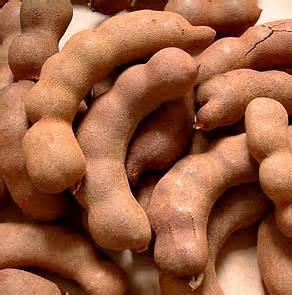
Tamarindo (tamarind)- a small red fruit that makes a yummy cold drink on those unbearably hot days
 
 
Fruta china- (carambola or star fruit)- I’ve only eaten once in Panama but absolutely loved it. The fruit has distinctive ridges running down its sides (usually five but can sometimes vary); in cross-section, it resembles a star, hence its name. The entire fruit is edible and is usually eaten out of hand. They may also be used in cooking and can be made into relishes, preserves, and juice drinks.


Naranjilla- this fruit looks very similar to an orange but don’t be fooled-the outside skin is actually a very hard shell that takes a machete to open. Inside is a yummy green translucent pulp that has a taste of pineapple and lemon.
 
 
With all these yummy fruits its no wonder that dental problems are so common!

Wednesday, September 9, 2015

Now, it is up to you!


I have now been in service for 19 months- time flies! With only 7 months left of my service, I am soaking in as much Panama time as possible: visiting other volunteers, seeing other parts of the country, and sharing with community members.

But with only 7 months left there is still a plethora of work to do! As mentioned in the previous post, we are trying to finish an eco-stove project and are still organizing an effective trash management system. At this point in my service, I am asking friends, followers, family and anyone interested in PC work in Panama to help me and the community of La Mina!

Below is the link with more information about the project and how to donate.

https://beta.peacecorps.gov/donate/project/advancing-cook-technology-in-panama/

For those who have been following, I hope my story has been interesting, insightful and educational. Those who are familiar with the challenges and successes, thank you for always being by my side. My service could not have come this far without your support.

Friday, July 31, 2015

Whats cooking in Panama?

Life in La Mina has been going great. Two months have passed and I know everyone on a first name basis and have built some great friendships.

In terms of work, I have been organizing 2 main projects. The first primary project is ecological stoves. The traditional cook method in Panama involves the pot on top of 3 rocks and underneath is an open flame. However, people is it an open flame, this method uses an abundant amount of firewood, takes a long time to cook since the heat escapes, and the smoke has hazardous effects on the cookers. 

Traditional cooking method

The ecological stove is very similar to a fireplace that encloses the flame and traps in the heat. There are three main benefits to the eco-stove:

1. Less firewood is used. Because the heat is trapped, it is not necessary to use as much firewood. As a conservation volunteer, I am promoting the reduction of wood use and deforestation. Estimates vary, but deforestation is thought to claim up to 50,000 hectares (123,500 acres) of forest a year in Panama
. Also, since less time is required to look for firewood, there are social impacts. With development, more women are leaving to look for work and are learning trades to earn their own salary. With less time spent around the house (looking for wood) this time can be spent supporting the family.


2. Less smoke. Millions of Panamanians suffer from lung diseases such as asthma, lung cancer, cystic fibrosis, and bronchitis. It is estimated that many of these sickness were smoke related from cooking over an open fire. It is estimated that the eco-stoves produce up to 50% less smoke.
3. Cooks faster. It is estimated that the eco stove cooks in half the time of the traditional 3 rock method.


Bad ass eco stove


Community members and I picking up materials
Making the bricks
The materials mainly consist of bricks and cement. I will be writing a grant to pay for the bricks, cement, and iron grills. With the help of the community, participants will be providing local materials such as sand, rocks, and ash.


There have been some challenges that have come along with the eco stove project. As a volunteer we are always trying to promote educational projects. For those who wanted to participate in the project and receive a stove in their home, I had several mandatory meetings (stove benefits and deforestation), participants had to agree to look for their own local materials, bought materials will be dropped off in a local area and participants had to agree to look for their materials to bring to their house, and participants agreed to pay $5 to help with transport costs and help pay for food when we have communal work days.
Some participants are trying to get out of the requirements by having family members attend the meetings to share the information. Others just want to pay the $5 and have others look for the materials and participate in the work days. There are also several families who want to participate but do not live permanently in the community, making participation difficult. Others do not use a 3 rock stove and use a gas stove but still want an eco-stove because they see it as an opportunity for a pretty gift (I could criticize the Panamanian government here, who constantly gifts things to its citizens, making the people very dependent on their aid). To help avoid putting all of the decision making on me, I helped found a Stove Committee- president, treasurer, and secretary to help me not only with the challenges but also so the community itself can feel responsible for the project.

The second project we are initiating is trash management. The previous volunteer was able to solicit bins to organize recyclables. Now my job is to create a responsible group to organize transport and funds. There is a recycling facility about an hour away from the community and the Ministry of the Environment has agreed to help with the transport of the recyclables. I have also been working on the educational aspects of the risks of burning trash, the time it takes for trash to decompose and trash crafts.

We started construction on a recycling center. The idea is to build a house to store the bins away from dogs or other animals. And when the bins fill up- we have extra storage. It has been very inspiring seeing the community coming together with the necessary materials- nails, wood, zinc sheets, ect.

I also spend one day a week in the school garden. The students, teachers and I have worked on organic compost, organic bug repellents, seed beds and seed saving.

I have also taken some time to explore the beautiful surrounding areas- aka the province of Cocle. Many community members have a second house close to their farm up in the mountains. I have been lucky enough to hike up into the mountains to check out the beautiful views and enjoy the fresh breeze! 


Also Peace Corps Panama now has its own website! Check it out
http://panama.peacecorps.gov/content/community-environmental-conservation-0


Tuesday, June 2, 2015

The Times they are a´changing

First, I would like to apologize for the lack of the entries the past few months. There have been quite a few changes for me here in Panama. I have received a site change, a rare but possible occurrence in Peace Corps policy. In Peace Corps terms a site change is the replacement of a volunteer from one post to another due to medical, security or work related issues. But a site change for me means new friends, new culture, new work, new house and a new life. Thankfully, I have had very few medical and security issues during my service in Bocas del Toro, but Peace Corps agreed to move me for the lack of cooperation in my community.

In previous posts I have described some of the challenges I have faced and while I can describe for pages everything terrible that has happened or why they happened (working with an indigenous community, being a woman, community dynamics, education level, poverty level, ect) I would like to use this post to focus on the positives. While leaving the relationships that I have built in Santa Marta was one of the hardest things I have ever done, I know I have made the right to decision and will continue to do what I came to do and share my life with the people of Panama.

I now live in the community of La Mina, located in the province of Coclé. I am much closer to Panama City (unfortunately this means no more trips to Costa Rica) and live in a Latino community. The previous volunteer was in my training group but had to leave her service early. However, the community worked and collaborated with her. In the first year they built 30 ecological stoves and started a recycling program in the school. When she had to leave, Peace Corps saw that La Mina really deserved a volunteer so confidently placed me here. I have been in the community for 3 weeks and absolutely love it. Residents have been heartfelt, welcoming, generous ..everything I could have ever asked for. The teachers in the elementary school have opened their doors and I am helping with conservation education. I also have already formed connections with ANAM (the Panamanian environmental agency) and we have made solid plans to continue working in eco-stoves (I plan to explain eco stoves in another post, stay tuned).

I am blessed and honored to be serving the next year of my life in La Mina. Thank you to all who have supported me through this decision and this hell of a road we call life.

Fun basic info of La Mina (warning: graphic details):

Potable water! No more tapeworms in my tummy
Latrines! No more pooping in a bucket and making compost
Still do not have electricity but there is current governmental work to install it
No cell service
L But don’t worry I will climb my hill for 20 minutes to talk to y´all!
New mailing address! Please refer to the Contact information tab
Population: 150, Students in elementary school: 18
Religion: Catholic
Common salary: Sale of oranges, avocados, mangos, coffee and other agricultural goods (yes I do eat all of these fruits almost daily)


The road that leads to La Mina

My new house 

Trips to the river

My new friends love to fish 


Wednesday, March 11, 2015

Start to 2015

 
After the unfortunate events in my community, things have been slowly going back to normal. It is now “pifa” season and people are in the farms harvesting this delicious fruit. Pifa is a nutritious, high fiber fruit that tastes like a cross between a potato and carrot. You boil them in salt water until they are soft and serve in the morning with coffee, delicious!
 
The summer vacation has ended which means that students are back in school but also means I wrapped up my Eco-club.  For our last mini-project we made a welcome sign made of bottle caps (yay reusing). The kids loved working on the sign and the community appreciates the warm welcome.
 
I also brought three kids from my community (ages 12 to 15), to a 5 day camp about professionalism, leadership, sexual health and goal-setting. All in all, there were about 45 kids and 12 facilitators who brought this amazing experience together for these young people from rural Panama. For many of the kids it was the first time sleeping away from home, (for kids from other provinces) the first time talking to Ngäbes or Bugles (indigenous people), learning about sexual health and prevention of STDs and pregnancy, how to make a goal and why goal setting is important in our lives, etc. We had a really productive and fun time and on the last night all 45 kids were crying because they did not want to leave the new friends they had just made.
 
Go team blue!
I hosted a Leadership Seminar in my community. 20 participants received sessions on group organization, time and money management, goal setting and problem resolution. 2 Language and Cultural Facilitators from Peace Corps also came to help out. After the seminar, I plan to do follow-up surveys to see if people are applying what they have learned.
 
Untying the Human Knot
Practicing POCA- a tool for problem solving
Walking in someone else's shoes
 
 
Every participant received a certificate
The legality of reforesting by our water well has still not been resolved, however the eco-club continued to collect seeds and plant along the creek. The adults also organized a clean-up along the path that leads to my community. They used machetes to cut the long grass and we planted trees along the path.
Finally, I have completed a year in Panama! As much of a struggle this year has been, I have really reflected on how much I have achieved in my service and for my own personal growth. I headed to Mid Service Training in Panama City for a required 1 year med and dental checkup (so don’t worry Mom, I am fine and healthy). After the medical appointments, we reflected as a group on how work was going and what challenges we faced. It was a great refresh and inspired me to chug along for the next year. We also took advantage of our paid trip to the city and hit some tourist attractions. We traveled to Panama Viejo, a preserved section of the city with church and buildings from the 1600’s. We took advantage of the delicious street vendor food, night-life, and artisan markets
 

Panama Viejo
 
The newer areas of Panama

Sunday, March 8, 2015

Music of Panama

a few of my favorite Panamanian jams (traditional and modern)

https://www.youtube.com/watch?v=OxxggwHFj7M
one of my favorites

https://www.youtube.com/watch?v=foyH-TEs9D0
stand by me remix by the gorgeous Prince Royce

https://www.youtube.com/watch?v=QFs3PIZb3js
a bachata mix- hot pana dance

https://www.youtube.com/watch?v=fiWn0XTWSvg
more traditional music with instruments and dance

https://www.youtube.com/watch?v=YXnjy5YlDwk
great inspirational song

https://www.youtube.com/watch?v=TapXs54Ah3E&t=23
"we fight, then make up, we deal with each other, we love each other" my kinda love song

https://www.youtube.com/watch?v=2htK9TdbY4A
"Rabbit Dance" a fun song to dance to with the kids or at the cantina!

https://www.youtube.com/watch?v=hH9cQYRiekw
for those reggae lovers, Panama has it too!

Wednesday, February 18, 2015

eye of the storm


There were 2 deaths in my community on the same night. Rosa, a devoted Christian and family woman of 52 and Juan, the elderly botanical medicine man, both passed on January 15th at 11pm. Both were terribly sick but we were not expecting such a tragic ending. I was at Rosa’s 3 hours earlier, helping the family out with whatever chore I could: fetching water or cooking soup. I returned home to rest and that evening I was awoken to screaming neighbors outside of my door; she had passed. My immediate reaction was to run. Run to the families. Run to the kids and spouses. I stayed with them all night as they screamed, wept, and even fainted.

The community stopped at a standstill for almost 2 weeks. No one went to the farm, no one left to sell cocoa; the only movement was coffin making and visitation to the families. Hundreds of people came from neighboring communities to pay their respect to the families and Santa Marta.

The death I have experienced in my life as always been somewhat removed- whether it be by distance, time or association. Death is always a sensitive subject and never easy, but I was especially uncomfortable in a culture and country not of my own. I felt like a huge storm was blowing all the trees in different directions, and I was the only non-native species that didn’t know which way to sway. I tried to follow everyone’s example and visited the families, always bearing gifts or helping out with some chore. During moments of long silences, I thought it best to be myself. I once broke a long silence by asking, “Hey you want to learn a funny word in English? Hippopotamus” –which was immediately followed by an uproar of laughter and gestures of gratefulness.

However, as much sympathy as I had for these families, I could not get over my own feelings of loneliness (I am even embarrassed sharing this to the public). During the burials, (mind you in a culture that does not publicly show affection) family members were holding each other, bracing each other, wiping each other’s tears, while I was just… there. That night I went home alone and cooked dinner for myself and ate by myself- a routine I do every day, but was tattered by the absence of my biological family.

What I really want t get across in this post is that Peace Corps is not a fairy tale of successful development work and happy children and beautiful pictures. Life is happening, and it can end at any moment. Cherish every day and call someone you love after reading this.